If you’ve ever hesitated between blond or blonde, you’re definitely not alone. Both spellings are correct, but they are traditionally used in slightly different ways. The confusion becomes even greater when you’re describing a person’s hair, because blond and blonde can both appear in modern English.
So, which one should you use?
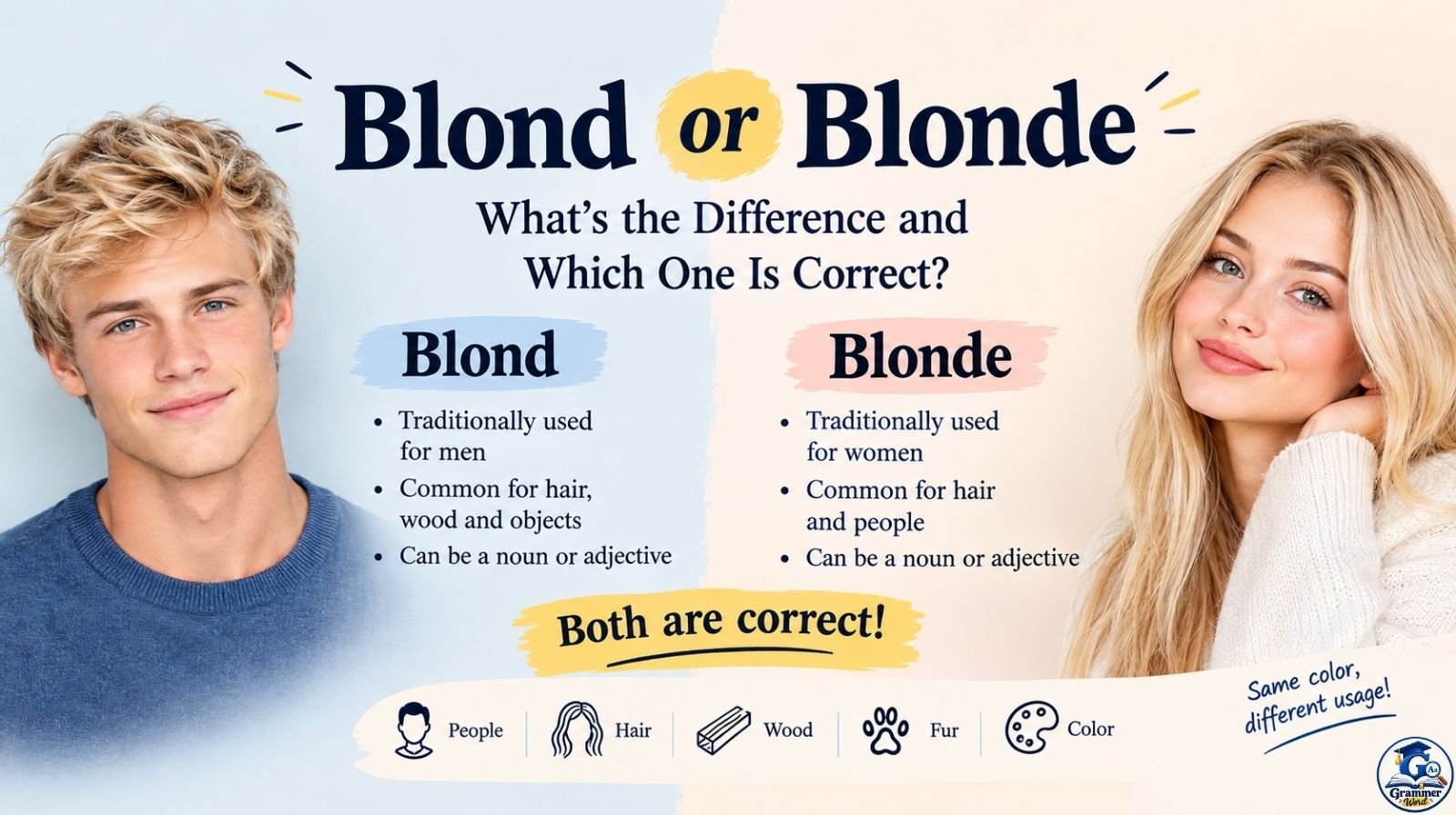
The short answer is: both are correct. Traditionally, blond is used for males, while blonde is used for females when referring to a person. However, when the word works as an adjective especially before words such as hair modern English often allows either spelling.
Let’s look at the difference, the history behind the two forms, and the easiest way to choose the right one.
Read More: Patients vs Patient’s: Meaning, Difference, And Correct Usage
What Is the Difference Between Blond and Blonde?
Blond and blonde describe the same basic color: a light yellow, golden, or pale brown shade. The main difference is a traditional grammatical distinction based on French.
In traditional English usage:
- Blond is associated with a male person.
- Blonde is associated with a female person.
- Blond is commonly used for things such as hair, wood, or fur.
- Modern English increasingly uses blond as a general, gender-neutral form.
Merriam-Webster lists blond as the main dictionary entry and identifies blonde as a variant. It also explains that the traditional distinction uses blond for boys or men and blonde for girls or women.
Blond: Meaning and Usage
Blond can function as an adjective or noun.
As an adjective, it describes a light hair color or something with a light color:
- He has blond hair.
- She has blond hair.
- They bought a blond wood table.
- The dog has blond fur.
As a noun, blond traditionally refers to a male person with blond hair:
He is a natural blond.
Blonde: Meaning and Usage
Blonde can also function as an adjective or noun.
Traditionally, it is especially associated with a woman or girl:
- She has blonde hair.
- My sister is blonde.
- She is a natural blonde.
Therefore, if you’re following the traditional gender distinction, the choice is straightforward: blond for a man and blonde for a woman.
Is Blond or Blonde More Correct?
Neither spelling is simply “more correct.”
Both are established English forms. The choice depends on what you’re describing, the style you’re following, and whether you want to preserve the traditional gender distinction.
For example:
| Situation | Traditional choice | Common modern choice |
|---|---|---|
| A man with light hair | blond | blond |
| A woman with light hair | blonde | blonde or blond |
| Hair color generally | blond | blond or blonde |
| Blond wood | blond | blond |
| A man as a noun | blond | blond |
| A woman as a noun | blonde | blonde |
Blond or Blonde for Hair: Which Should You Use?
When discussing hair, both spellings can be correct.
This is where many writers become confused because the traditional rule and modern usage do not always line up perfectly.
“Blond Hair” vs. “Blonde Hair”
Both expressions can be found in reputable English usage.
For example:
- She has blonde hair.
- She has blond hair.
- He has blond hair.
- The child has blond hair.
Merriam-Webster specifically notes that blond and blonde can both be adjectives describing hair. It also gives examples of both forms in contemporary usage.
If you’re writing for a general audience, blond hair is a useful gender-neutral choice.
However, if you’re describing a woman and following traditional usage, blonde hair is perfectly natural.
When Describing a Person
Consider these examples:
Traditional:
- James is a blond.
- Sarah is a blonde.
Modern adjective usage:
- James has blond hair.
- Sarah has blond hair.
Notice the difference. The spelling becomes especially interesting when the word is used as a noun rather than simply describing someone’s hair.
When Should You Use Blond Instead of Blonde?
A simple rule can make the choice much easier.
Use blond when you are describing:
- A man or boy, traditionally.
- Hair color in a general or gender-neutral context.
- Objects with a light yellowish or pale brown color.
- Materials such as light-colored wood.
Blond for Men
If you’re following the traditional convention:
- He is a blond man.
- The blond actor walked onto the stage.
- My brother was blond as a child.
Read More: Awhile or A While: What’s The Difference?
Blond for Objects and Materials
When the word describes something that isn’t a person, blond is normally preferred.
For example:
- blond wood
- blond fur
- blond eyebrows
- blond color
- dark blond hair
Merriam-Webster notes that blond wood is the standard form, while blonde wood is less common.
Blonde for Women
Under the traditional convention:
- She is a blonde.
- Maria became blonde.
- The actress is a natural blonde.
The noun blonde is particularly common when referring to a woman with blond hair.
Why Are There Two Spellings of Blond?
The explanation goes back to the word’s history.
The French Connection
English borrowed blond from French-related forms. Historically, French distinguishes masculine and feminine forms, which helped establish the English convention of:
- blond masculine
- blonde feminine
That distinction eventually became part of English usage.
Merriam-Webster traces the word to Anglo-French forms and records its first known English use in the 15th century.
Has the Rule Changed?
Not exactly but English usage has become more flexible.
Modern English frequently avoids unnecessary gender distinctions. As a result, blond is increasingly used as a general adjective regardless of the person’s gender.
That doesn’t make blonde wrong.
Instead, it means writers now have more than one acceptable option depending on context and style.
Blond vs. Blonde: Easy Comparison Guide
If you need a quick answer while writing, use this guide.
Quick Rule
Use “blond” for a general or gender-neutral description, and traditionally use “blonde” for a woman or girl.
Here’s a practical comparison:
| Word | Typical Use | Example |
|---|---|---|
| blond | General adjective | She has blond hair. |
| blond | Man/boy | He is blond. |
| blonde | Woman/girl | She is blonde. |
| blonde | Female noun | She is a blonde. |
| blond | Objects/materials | blond wood |
| blond | General hair-color term | dark blond hair |
A Simple Decision Process
When you’re unsure, ask yourself three questions:
Step 1: Am I describing a person?
If yes, decide whether you want to follow the traditional gender distinction.
Step 2: Am I describing an object or material?
Use blond in most cases.
Step 3: Am I using the word as a noun?
Traditional usage normally favors blond for a man and blonde for a woman.
This approach keeps your writing natural without forcing an unnecessary distinction.
Read More: Your vs You’re: Simple Guide To The Most Confusing English Pair
Real-Life Usage Example: Why Both Forms Can Be Correct
Imagine an editor is reviewing two sentences:
Sarah has blonde hair.
and
Sarah has blond hair.
At first glance, the editor might think one sentence must be wrong. However, both forms can be defended in modern English.
The first sentence follows the traditional convention in which blonde is associated with a woman. It sounds completely natural and remains extremely common.
The second sentence treats blond as a general adjective describing hair color. This usage is also accepted and can be especially useful when a writer wants a gender-neutral form.
Now imagine the sentence changes:
Sarah is a blonde.
Here, blonde is being used as a noun. The traditional feminine form is much more noticeable, so blonde is the natural choice if the writer is maintaining the traditional distinction.
By contrast:
Michael is a blond.
uses the traditional masculine noun.
Finally, consider:
They installed blond wood flooring.
Neither blonde nor gender has anything to do with the subject. The word simply describes the color of the wood, so blond is the standard choice.
This illustrates the most important point: the difference between blond and blonde is not a difference in meaning. Both refer to the same basic light hair or color. The difference mainly comes from traditional gendered usage and grammatical context.
2025–2026 Usage and Data Snapshot
Because blond and blonde are spelling variants rather than two separate concepts, authoritative sources generally do not publish a simple annual percentage showing how often each spelling is used.
However, current dictionary evidence confirms that both forms remain active in contemporary English.
What Current Dictionary Data Shows
Merriam-Webster’s blond entry was updated with new example material in March 2026, demonstrating that the word continues to be actively documented in current English. The dictionary also records its first known use as an adjective in the 15th century.
Its 2025 entry continues to identify blonde as a variant and describes the traditional distinction between masculine blond and feminine blonde.
Google’s current search guidance also emphasizes that useful content should provide accurate, original, people-first information rather than manipulate search rankings. That makes clear explanations of genuine language distinctions more valuable than simply repeating keyword variations.
Read More: Skillset or Skill Set: Which Term Is Correct In Modern English?
The Practical Takeaway
The 2025–2026 evidence supports a simple conclusion:
Blond and blonde are both established forms, and neither should be treated as an outright spelling mistake.
The important issue is choosing the form that fits your sentence and the style you want to follow.
Common Mistakes to Avoid With Blond and Blonde
Mistake 1: Thinking Blonde Is Always Wrong for Men
Some people assume that blonde can never describe a man.
That’s too strict.
Traditional English generally uses blond for a man, but modern adjective usage is more flexible.
For a traditional style:
He is blond.
For hair:
He has blond hair.
Mistake 2: Thinking Blond Is Only for Men
This is also an oversimplification.
Although blond has traditionally been associated with males, it is widely used as a general adjective:
She has blond hair.
Therefore, don’t automatically mark blond hair as incorrect simply because the person is female.
Mistake 3: Writing “Blonde Wood”
When describing light-colored wood, blond wood is the safer standard choice.
For example:
The room has beautiful blond wood floors.
Mistake 4: Treating Blond and Blonde as Different Colors
They don’t represent two different hair colors.
Blond and blonde refer to the same basic color range.
The spelling difference is primarily about usage and traditional grammatical conventions.
Mini Quiz: Blond or Blonde
1. Quick Start: Which One Is Correct?
Which spelling traditionally describes a man with light-colored hair?
A) Blonde
B) Blond
C) Blound
D) Blonnde
Answer: B) Blond
2. What About Her?
Which spelling is traditionally used as a noun for a woman with light-colored hair?
A) Blond
B) Blonde
C) Blound
D) Blonda
Answer: B) Blonde
3. Pick the Natural Phrase
Which phrase is commonly used for light-colored wood?
A) Blonde wood
B) Blond wood
C) Blound wood
D) Blonded wood
Answer: B) Blond wood
4. Hair Check!
Which sentence follows traditional usage?
A) He is a blonde.
B) He is a blond.
C) He is a blound.
D) He is a blonnde.
Answer: B) He is a blond.
5. Girl or Guy?
Which sentence traditionally uses the feminine form?
A) She is a blond.
B) She is a blonde.
C) She is a blound.
D) She is a blonded.
Answer: B) She is a blonde.
6. Same Color or Different?
Do blond and blonde normally refer to different hair colors?
A) Yes, completely different colors
B) Only in American English
C) No, they describe the same basic color
D) Only when used as nouns
Answer: C) No, they describe the same basic color
7. Modern English Twist
Can blond be used as a general adjective for hair regardless of gender?
A) Yes
B) No
C) Only in poetry
D) Only for children
Answer: A) Yes
8. Spot the Correct Sentence
Which sentence is correctly written?
A) She has blond hair.
B) She has blound hair.
C) She has blondee hair.
D) She has blonded hair.
Answer: A) She has blond hair.
9. Traditional Rule
What is the traditional distinction between blond and blonde?
A) Long hair vs. short hair
B) Dark hair vs. light hair
C) Masculine vs. feminine usage
D) Formal vs. informal English
Answer: C) Masculine vs. feminine usage
10. Which One Sounds Right?
Choose the traditional sentence for a woman:
A) Maria is a blond.
B) Maria is a blonde.
C) Maria is a blound.
D) Maria is a blondness.
Answer: B) Maria is a blonde.
11. Object Alert!
Which spelling is generally preferred when describing a light-colored object?
A) Blonde
B) Blond
C) Blondie
D) Blondee
Answer: B) Blond
12. Where Did the Difference Come From?
The traditional blond/blonde distinction is strongly connected to which language?
A) Spanish
B) French
C) German
D) Italian
Answer: B) French
13. Can Both Be Correct?
Which statement is true?
A) Only blond is correct
B) Only blonde is correct
C) Both blond and blonde are established English forms
D) Neither spelling is correct
Answer: C) Both blond and blonde are established English forms
14. Fill in the Meaning
If you’re writing in a gender-neutral way about hair color, which form can work well?
A) Blond
B) Blondee
C) Blound
D) Blonded
Answer: A) Blond
15. Final Challenge!
What’s the easiest rule to remember?
A) Blond and blonde mean different colors
B) Blond is always wrong
C) Blonde is always wrong
D) Both are correct, but traditional usage distinguishes them by gender
Answer: D) Both are correct, but traditional usage distinguishes them by gender
FAQs
Q1. Is “blond” or “blonde” correct?
A: Both are correct. Traditionally, blond is used for males and blonde for females when referring to people. As an adjective, especially with hair, blond can also be used as a general form.
Q2. Is blonde only for females?
A: No. Traditionally, blonde is the feminine form and blond is the masculine form. However, modern English usage is more flexible, particularly when the word is used as an adjective.
Q3. Should I write “blond hair” or “blonde hair”?
A: Both can be correct. Blonde hair follows the traditional feminine convention, while blond hair works as a general or gender-neutral description.
Q4. Is “blond” a noun?
A: Yes. Blond can be a noun referring traditionally to a man with blond hair. For example:
He is a natural blond.
The feminine traditional noun is blonde:
She is a natural blonde.
Q5. Is “blonde” a noun or adjective?
A: It can be both.
As an adjective:
She has blonde hair.
As a noun:
She is a blonde.
Q6. Which spelling should I use in formal writing?
A: For formal writing, consistency matters most. If your style follows traditional gender distinctions, use blond for men and blonde for women. If you prefer a gender-neutral approach, blond works well as an adjective for hair and color.
Conclusion:
So, blond or blonde which one is correct?
Both are correct.
The traditional distinction is simple: blond is masculine and blonde is feminine when referring to people. However, modern English frequently uses blond as a gender-neutral adjective, particularly in expressions such as blond hair. For objects and materials, such as blond wood, blond is generally the preferred form.
The key is to focus on context rather than assuming one spelling is always right.
If you’re describing a woman, blonde is a natural traditional choice. If you’re describing a man, blond is the traditional form. If you’re describing hair in a general way, blond hair is a clear and widely accepted option.
When in doubt, remember:
Blond and blonde describe the same basic color the spelling mainly reflects traditional usage and context.
For more clear English spelling and usage guides, keep exploring reliable grammar references and choose the form that best fits your audience and writing style.
Discover More Article
- Midday vs Mid Day: Which Spelling Is Correct In Modern English?
- Masonary vs Masonry: Which Spelling Is Correct And Why It Matters
- Possum or Opossum: What’s The Correct Spelling And Usage?
Keep learning with more easy grammar lessons on Grammer Word.com
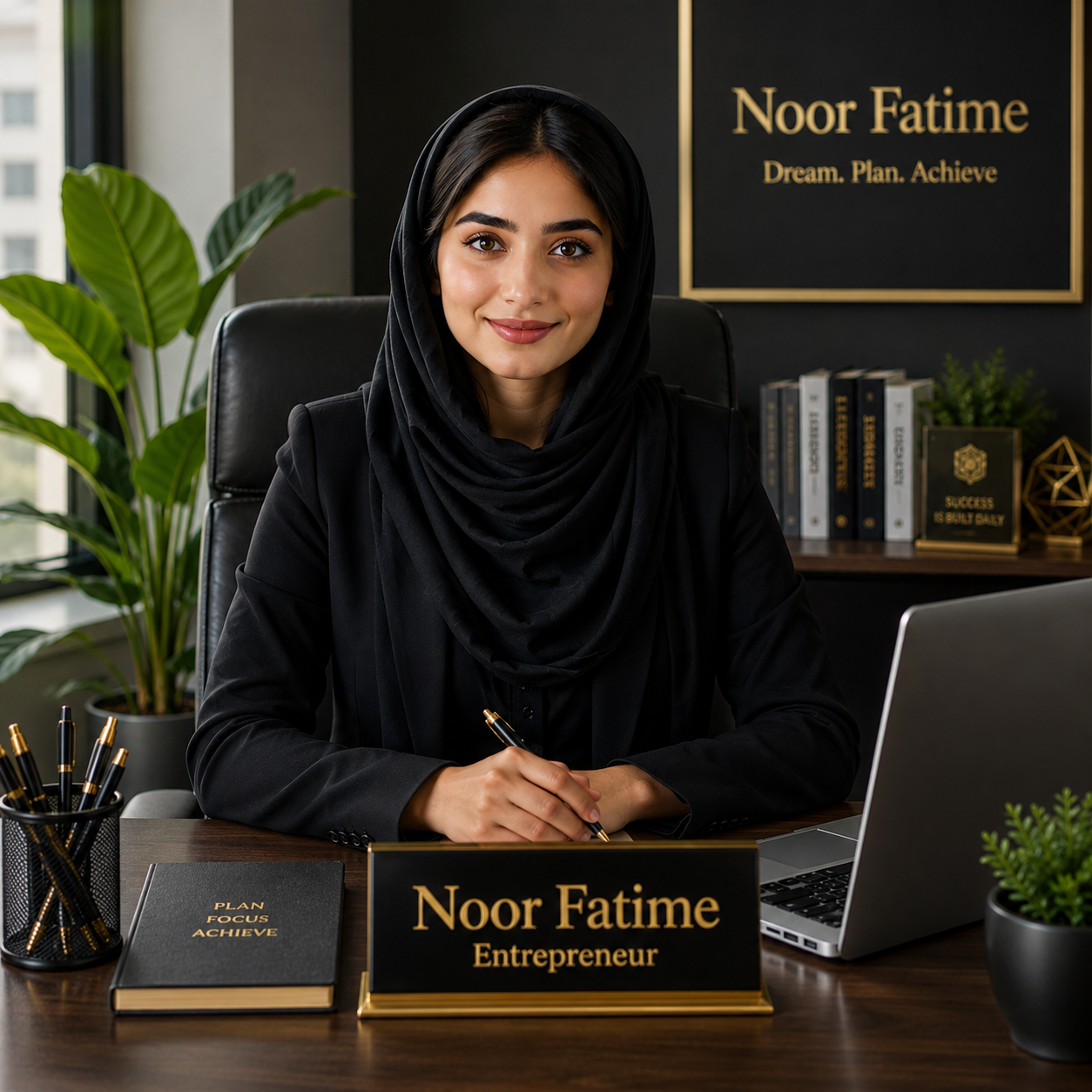
Hi, I’m Noor Fatima, the person behind this website. I created this site to make English grammar and confusing words easier to understand. I love breaking down tricky words, meanings, spellings, and grammar rules into simple explanations. My goal is to help you learn English naturally, avoid common mistakes, and feel more confident every time you write or speak.