
Have you ever stopped while writing because you weren’t sure whether to use propose or purpose? You’re not alone. These two words look similar, but they have different meanings and grammatical uses.
Understanding propose vs purpose can help you choose the correct word in school assignments, emails, professional documents, and everyday conversations.
The good news is that the difference is easy to understand once you know what each word means. Propose usually means to suggest an idea, plan, or course of action. Purpose usually means the reason something exists or the goal behind an action.
For example, you can propose a new plan, but you can explain the purpose of that plan. Both words are correct English words, but the right choice depends on what you want to communicate.
In this guide, you’ll learn their meanings, pronunciation, grammar rules, common mistakes, and practical examples to help you use both words confidently in 2026.
Read More: Soo vs. So: What’s The Difference? (2026 Guide)
Propose vs Purpose: What’s the Difference?

The main difference between propose and purpose is their meaning and grammatical function. Propose is primarily a verb, while purpose is primarily a noun.
Use propose when you want to suggest something for others to consider. Use purpose when you want to explain why something is done, what it is intended to achieve, or why it exists.
What Does Propose Mean?
Propose is a verb that means to suggest, recommend, or formally put forward an idea, plan, solution, or course of action.
For example:
- I propose a new schedule for the team.
- The teacher proposed a different way to solve the problem.
- She proposed several changes to the school project.
- The committee proposed a plan to improve public transportation.
In each example, someone is presenting an idea for consideration.
The word propose can also mean to ask someone to marry you. For instance, “He plans to propose to his partner next year.” The context makes this meaning clear.
What Does Purpose Mean?
Purpose is most commonly a noun that refers to the reason something is done, the goal someone wants to achieve, or the function something serves.
For example:
- The purpose of this meeting is to discuss the project.
- My purpose in learning English is to communicate more confidently.
- The purpose of this tool is to save time.
- She completed the assignment with a clear purpose.
In these sentences, purpose explains a reason, intention, or goal.
The word also appears in expressions such as on purpose, which means intentionally rather than accidentally.
For example: “I didn’t break the cup on purpose.”
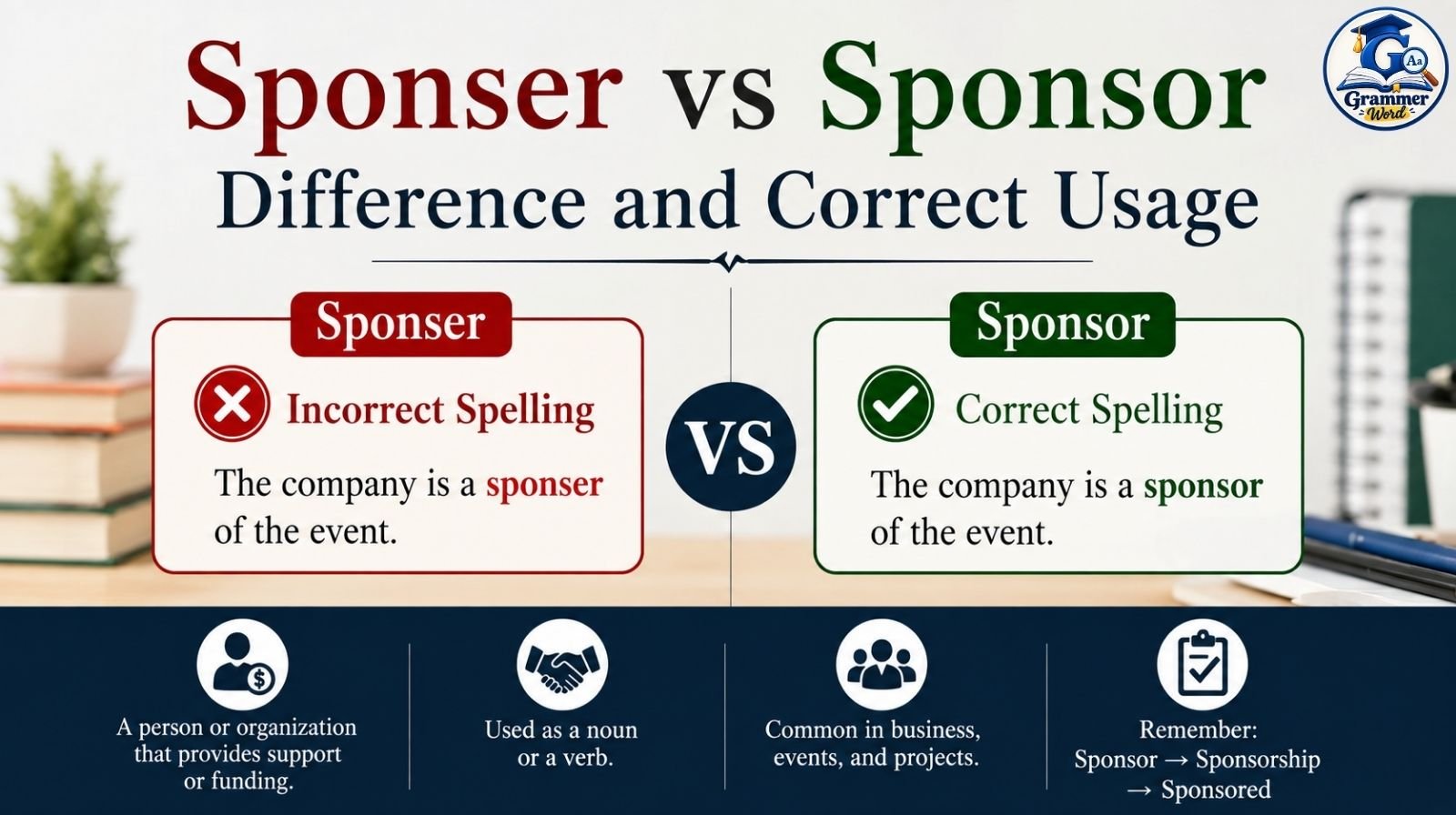
Read More: Sponser vs Sponsor: Difference And Correct Usage
Propose vs Purpose at a Glance
| Feature | Propose | Purpose |
|---|---|---|
| Main part of speech | Verb | Noun |
| Basic meaning | To suggest or put forward | A reason, goal, or intention |
| Main question | What are you suggesting? | Why are you doing it? |
| Example | I propose a new rule. | The purpose of the rule is safety. |
| Common expression | Propose a solution | On purpose |
| Related word | Proposal | Purposeful |
Easy rule to remember: Propose means to suggest; purpose means a reason or goal.
How to Use Propose and Purpose Correctly
Knowing the definitions is a good start, but grammar also matters. The easiest way to select the right word is to look at what your sentence is trying to express.
When Should You Use Propose?
Use propose when someone suggests an idea, presents a plan, recommends a solution, or formally puts something forward.
It often appears in academic, professional, and everyday writing.
Examples:
- Correct: I propose that we start the meeting earlier.
- Correct: The manager proposed a new marketing strategy.
- Correct: They propose building a larger library.
- Correct: He proposed to his partner during their vacation.
Notice that the word describes an action. Someone is making a suggestion or presenting something for consideration.
You can also use different forms of the verb, depending on the tense:
- Present: I propose a new idea.
- Past: I proposed a new idea.
- Present participle: I am proposing a new idea.
These forms help you describe suggestions made at different times.
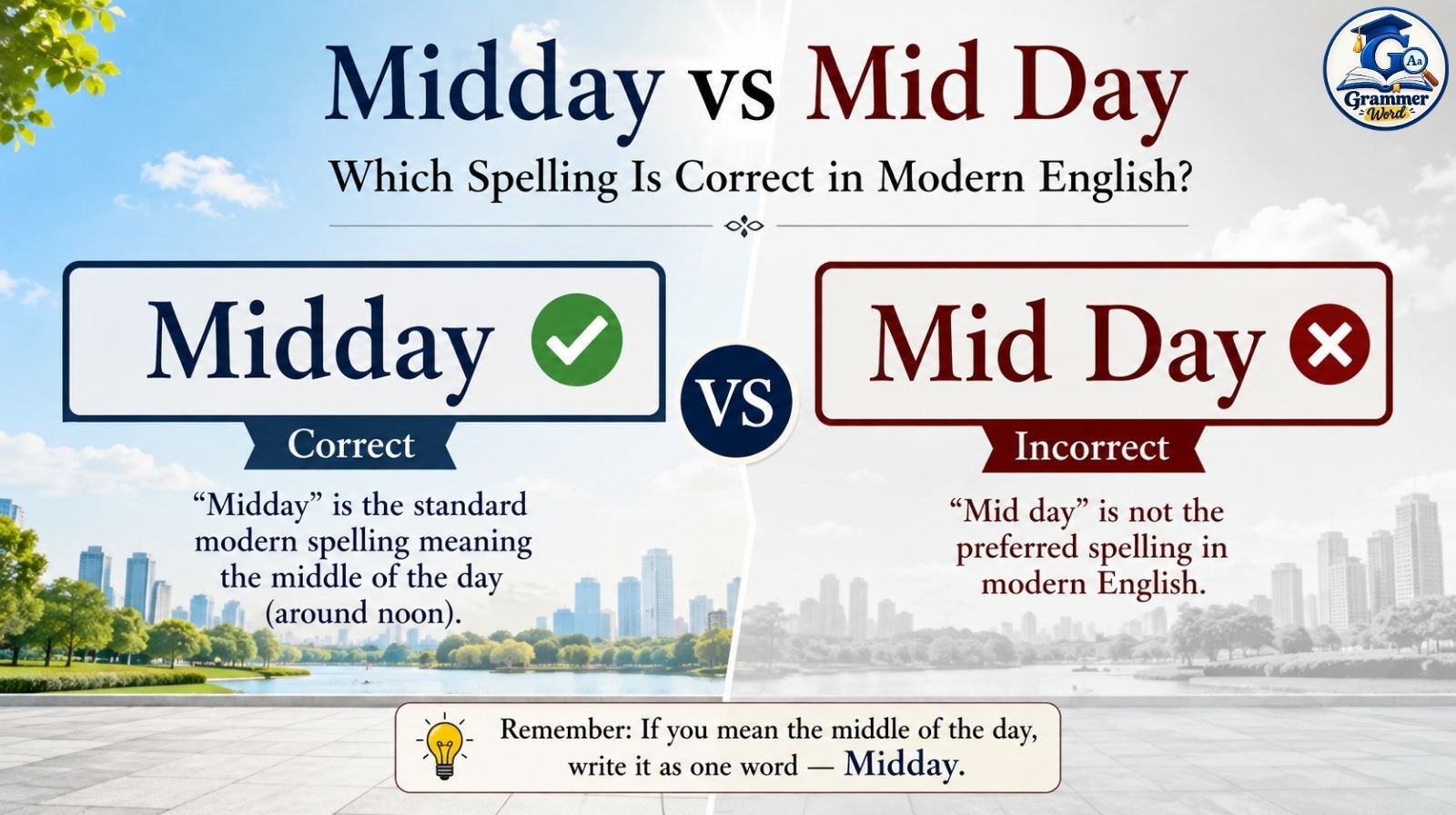
Read More: Midday vs Mid Day: Which Spelling Is Correct In Modern English?
When Should You Use Purpose?
Use purpose when discussing the reason for an action, the goal of a plan, or the intended function of something.
Examples:
- Correct: The purpose of the lesson is to improve reading skills.
- Correct: What is the purpose of this document?
- Correct: She bought the notebook for a specific purpose.
- Correct: He accidentally deleted the file, but he didn’t do it on purpose.
Purpose frequently appears with phrases such as the purpose of, for the purpose of, on purpose, and a sense of purpose.
For example, “The purpose of the campaign is to raise awareness” explains the campaign’s goal. It doesn’t describe someone suggesting the campaign.
Can Propose and Purpose Be Used in the Same Sentence?
Yes! Using both words together is an excellent way to understand the difference.
Consider this example:
The team proposed a new training program, and the purpose of the program is to help employees develop new skills.
Here, proposed describes the team’s action. Purpose explains why the program exists.
Another example:
I propose changing the school timetable because the purpose of the change is to give students more time for revision.
The first word introduces a suggestion, while the second identifies the intended result.
Read More: Girlie or Girly: Which Word Is Correct? Meaning, Usage, Differences, And Examples For 2026
Propose vs Purpose: Pronunciation and Spelling
Although these words look similar, their pronunciation and spelling are different. Paying attention to these differences can help you recognize the correct word when speaking or writing.
How Do You Pronounce Propose?
In American English, propose is commonly pronounced pruh-POHZ, with the stress on the second syllable.
The final sound is a voiced “z” sound.
Example: “I propose a better solution.”
When you say this sentence aloud, the stress falls on the second syllable. Remembering this pattern can make the word easier to recognize.
How Do You Pronounce Purpose?
In American English, purpose is commonly pronounced PUR-puhs, with the stress on the first syllable.
Unlike propose, the second syllable doesn’t have the same long “oh” sound. The ending also sounds different.
Example: “The purpose of the meeting is clear.”
Pronunciation varies somewhat between British and American English, but the distinction between the two words remains.
Why Are These Words Confused?
There are several reasons people mix up propose and purpose:
- Similar spelling: Both words begin with “p” and contain several similar letters.
- Similar sound patterns: When spoken quickly, their beginnings may sound alike to English learners.
- Different grammatical roles: Writers may focus on spelling without checking whether the sentence needs a verb or a noun.
- Limited context: Someone writing quickly may select a familiar-looking word without checking its meaning.
The solution is simple: read the entire sentence and identify its intended meaning before choosing the word.
Read More: Masonary vs Masonry: Which Spelling Is Correct And Why It Matters
Common Mistakes With Propose vs Purpose
Even when you understand both definitions, it’s possible to use the wrong word in a sentence. These examples show common errors and how to correct them.
Incorrect vs Correct Examples
| Incorrect sentence | Correct sentence | Why? |
|---|---|---|
| I purpose a new idea. | I propose a new idea. | You are suggesting an idea. |
| What is the propose of this meeting? | What is the purpose of this meeting? | You are asking about the meeting’s reason. |
| She purpose a new solution yesterday. | She proposed a new solution yesterday. | The sentence describes a past suggestion. |
| The propose of this exercise is practice. | The purpose of this exercise is practice. | The sentence identifies a goal. |
| They purpose changing the rules. | They propose changing the rules. | They are suggesting a change. |
In ordinary modern English, purpose is mainly used as a noun. Although it can be used as a verb in some contexts, that usage is uncommon. For everyday writing, propose an idea and the purpose of an idea are the natural choices.
A Simple Trick to Avoid Confusion
Ask yourself one question: Am I suggesting something, or am I explaining why something exists?
- If you’re suggesting something, use propose.
- If you’re explaining a reason, goal, or intention, use purpose.
For example:
“I propose a new study plan.”
This sentence presents a suggestion.
“The purpose of the study plan is to help me prepare for exams.”
This sentence explains the plan’s goal.
Once you recognize this difference, choosing between the two words becomes much easier.
Read More: This Is She or This Is Her? The Correct Way To Answer The Phone
Real-Life Example: Propose vs Purpose in a School Project

Imagine that a group of students is preparing a project to reduce paper waste at school. They want to encourage students and teachers to use fewer printed pages and make better use of digital resources.
During their first meeting, one student suggests placing recycling boxes near classrooms. Another recommends creating a shared folder where teachers can upload worksheets. A third student suggests printing assignments only when necessary.
The group discusses each suggestion before agreeing on a practical plan.
In this situation, the students propose several ideas. They are presenting possible solutions for the group to consider.
Next, the students write a short introduction explaining their project. They state that its purpose is to reduce unnecessary paper use, encourage responsible habits, and help the school save resources.
Here, purpose explains the reason behind the project.
Later, the students prepare a presentation for their teacher. One slide reads, “We propose introducing digital worksheets for suitable assignments.” Another reads, “The purpose of this change is to reduce unnecessary printing.”
Both sentences use the words correctly because each word performs a different job.
This example shows why the distinction matters in real communication. If the students wrote “The propose of our project,” the sentence would be grammatically incorrect.
They need purpose because they’re describing the project’s goal. If they wrote “We purpose introducing digital worksheets,” they would normally need propose because they’re suggesting an action.
The lesson applies beyond school projects. In a business meeting, a community initiative, or a personal plan, you can propose an action and then explain its purpose.
Read More: Patients vs Patient’s: Meaning, Difference, And Correct Usage
Propose vs Purpose: What Do the 2025–2026 Data Tell Us?
When discussing English word choice in 2026, it’s important to distinguish between general search behavior and data about a particular word pair. Reliable statistics can provide useful context, but they shouldn’t be used to make unsupported claims about how often people confuse propose and purpose.
Understanding Recent Search Trends
Search engines help people find answers to grammar questions, spelling problems, and differences between similar words. Many learners search for direct explanations because they want to understand a word and use it correctly in a sentence.
However, general search trends don’t automatically reveal how many people confuse a specific pair of words. A rise in searches for educational content doesn’t prove that searches for propose vs purpose have increased by a particular percentage.
There isn’t a verified statistic presented here that measures how frequently people confuse these two words in 2025 or 2026. Therefore, providing a specific confusion rate would be misleading.
What This Means for English Learners
For this word pair, the most useful approach is to focus on meaning, grammar, and examples rather than assuming one word is more popular.
The distinction is straightforward: propose means to suggest or put something forward, while purpose commonly means the reason something exists or is done.
Understanding that distinction helps students, writers, and professionals communicate more clearly. Instead of memorizing complicated rules, practise using each word in a sentence that reflects its meaning.
For example:
- I propose a new plan to improve the process.
- The purpose of the plan is to save time.
- The committee proposed several changes.
- The purpose of those changes is to improve safety.
These examples show how the words work in everyday communication without relying on unsupported statistics.
Read More: Possum or Opossum: What’s The Correct Spelling And Usage?
Frequently Asked Questions
Q1. Is It Propose or Purpose?
Both words are correct, but they have different meanings. Use propose to suggest an idea or plan. Use purpose to describe a reason, goal, or intention.
Examples:
- I propose a new solution.
- The purpose of the solution is to save time.
Q2. What Is the Main Difference Between Propose and Purpose?
The main difference is their grammatical role and meaning. Propose is primarily a verb that describes suggesting something. Purpose is primarily a noun that identifies why something exists or is done.
For example, you can propose a change and explain the purpose of that change.
Q3. Can Purpose Be Used as a Verb?
Yes. Purpose can be used as a verb meaning to intend or set something as a goal, although this usage is uncommon in everyday English.
For example, “She purposed to complete the work” is possible in certain contexts, but “She intended to complete the work” sounds more natural in modern everyday English.
Q4. What Is the Past Tense of Propose?
The past tense of propose is proposed.
For example: “The manager proposed a new schedule yesterday.”
The word proposing is the present participle, as in “The manager is proposing a new schedule.”
Q5. What Does It Mean to Propose Something?
To propose something means to suggest it or put it forward for consideration.
For example, “The students proposed a new recycling program” means the students suggested starting a recycling program.
The word can also refer to asking someone to marry you, as in “He plans to propose.”
Q6. What Does Purpose Mean in Simple Words?
Purpose means the reason for doing something or the goal you want to achieve.
For example, the purpose of studying is to learn, understand a subject, or prepare for an assessment. The exact purpose depends on the situation.
Q7. How Can I Remember Propose vs Purpose?
Use this simple memory trick:
- Propose = Put forward an idea.
- Purpose = The reason or goal.
Ask yourself whether you’re suggesting something or explaining why something is done. That quick check will usually help you choose correctly.
Conclusion:
When comparing propose vs purpose, remember that both are correct English words, but they aren’t interchangeable in ordinary usage.
Use propose when you want to suggest an idea, recommend a solution, present a plan, or ask someone to marry you. Use purpose when you want to explain the reason for an action, the goal of a project, or the intended function of something.
For example, “I propose a new study method” presents a suggestion, while “The purpose of the study method is to improve understanding” explains its goal.
The easiest way to avoid mistakes is to check the meaning of your sentence before choosing a word. This simple habit can improve your grammar, make your writing clearer, and help you communicate more confidently.
Keep learning with more easy grammar lessons on Grammer Word

Hi, I’m Noor Fatima, the person behind this website. I created this site to make English grammar and confusing words easier to understand. I love breaking down tricky words, meanings, spellings, and grammar rules into simple explanations. My goal is to help you learn English naturally, avoid common mistakes, and feel more confident every time you write or speak.